
Artificial Intelligence is one of the most innovative inventions in the field of technology. In today’s world, artificial intelligence is utilized in the process of writing, design, composition, marketing, education, and problem-solving.
With its rapid development, there is now much talk about whether AI can take the place of human creativity or whether originality is exclusive to humans. In order to answer that, we must first understand what creativity is and how human beings and machines think.
What Creativity Really Means
In essence, creativity can be defined as the ability to come up with new concepts and ideas that have practical uses for people. Creativity is not solely related to creative writing or art. Rather, it entails problem-solving, imagination, and innovative expression of emotions.
In today’s digital world, many writers also use tools like a grammar checker to improve their writing quality, fix mistakes, and make their ideas clearer before sharing them with others.
For example, a writer can generate thoughts for writing a novel from the emotions and experiences that have been encountered by him or her in real life. Likewise, an artist uses various hues and patterns to represent varied emotions, whereas a musician uses sounds and tunes to express his or her emotions.
How AI “Creates” Content
This is why artificial intelligence cannot think like a human being. It does not have feelings or experiences in its life. Rather, it learns by analyzing massive amounts of information from many different sources, such as books, internet pages, pictures, etc. Then, it tries to produce a new output based on this information.
This means that when artificial intelligence creates a picture or a story, it does not imagine anything out of the blue. On the contrary, it predicts patterns already found in its training data and combines them.
AI vs Human Creativity: Key Differences
The difference between AI and human creativity becomes clearer when we compare them side by side.
| Feature | Human Creativity | AI Creativity |
| Source of ideas | Emotions, imagination, experiences | Data and patterns |
| Original thinking | Deeply original and personal | Based on existing information |
| Understanding meaning | Strong emotional understanding | Limited understanding |
| Speed | Slower but thoughtful | Very fast |
| Flexibility | Highly flexible and unpredictable | Pattern-based and structured |
This comparison shows that AI is strong in speed and productivity, but humans are still stronger in emotional depth and originality.
Can AI Replace Human Creativity?
It appears that there is a general agreement on the part of many people that AI will never completely replace human imagination. Although AI can generate ideas, write articles, and make drawings, it fails to understand what it creates. It also lacks feelings, individual thinking abilities, and the importance attached to its own experiences.
Creative processes in humans involve more than creating things. Creativity involves intentionality, emotions, and significance. However, while AI may replicate the creativity of humans, it lacks the capability to think as human beings do. This explains why AI is perceived to be a complementary tool for human creativity.
How AI Is Helping Human Creativity Today
Despite the fact that AI cannot be a substitute for people, it has turned into an extremely effective tool for aiding in creative processes. Nowadays, lots of people, including authors, artists, students, and enterprises, utilize various AI programs that facilitate the process of creating different pieces.
Firstly, one can mention generating ideas for blog posts, advertising content, and even plans for enterprises. Secondly, AI assists in improving one’s grammatical knowledge, making better sentence structures, and even developing visual images in mere seconds. In fact, one can claim that in many cases, AI helps people who experience “creative block” to come up with new ideas.
Smarter Ways to Organize Learning
In modern learning environments, creativity and structured thinking are often supported by digital tools that help learners organize and retain knowledge more effectively. For example, students and professionals increasingly use platforms that turn complex ideas into interactive learning formats, such as flashcards and spaced repetition systems.
In modern learning environments, tools that organize knowledge into structured formats can support deeper understanding and retention, such as study decks, which help users review concepts systematically over time. Tools like these do not replace human thinking, but they enhance the learning process by making it easier to refine ideas and revisit key concepts efficiently.
Popular AI Tools Used for Creativity
Modern AI solutions can be employed for creative tasks. Solutions such as ChatGPT can be widely applied for creating texts and generating ideas. MidJourney is commonly utilized for producing artwork. AI-based software such as Canva AI helps users in creating content for social media and presentations.
The use of Grammarly AI helps users to improve their writing styles by making recommendations on the grammatical aspects. Jasper AI assists in creating marketing and SEO content.
This proves that AI can be integrated into creativity in any field of activity. Nevertheless, in all the above examples, humans play the leading role in setting directions and making decisions.
The Role of GPTZero in AI Detection
With the increase in use of AI-generated content, there has been a need in institutions, businesses, and publishing houses to detect whether certain work was generated by AI or humans. One of the methods being used for detecting AI-generated content is GPTZero.
GPTZero refers to an artificial intelligence detector that uses characteristics of writing, such as sentence structure, predictability, and complexity, to determine whether work was done by AI or a human writer. This AI detection method is commonly used in educational settings.
It is important to bear in mind that GPTZero is not very reliable because it misses certain elements of content created via artificial intelligence. Moreover, it cannot be considered flawless because at times it marks certain content as being AI-written even though it was written by humans.
The Risk of Overusing AI in Creativity
Though the use of AI helps in many ways, there is a certain level of threat due to over-reliance on AI systems. The first and foremost threat includes losing the essence of creativity. As mentioned above, creativity generated by AI follows a pattern; hence, over-reliance on these tools will make all creative minds follow the same patterns.
The second possible threat involves losing the art of deep and critical thinking. Over-reliance on AI without involving any human thinking can lead to the loss of creativity in the long run.
The Future of Creativity: Humans and AI Together
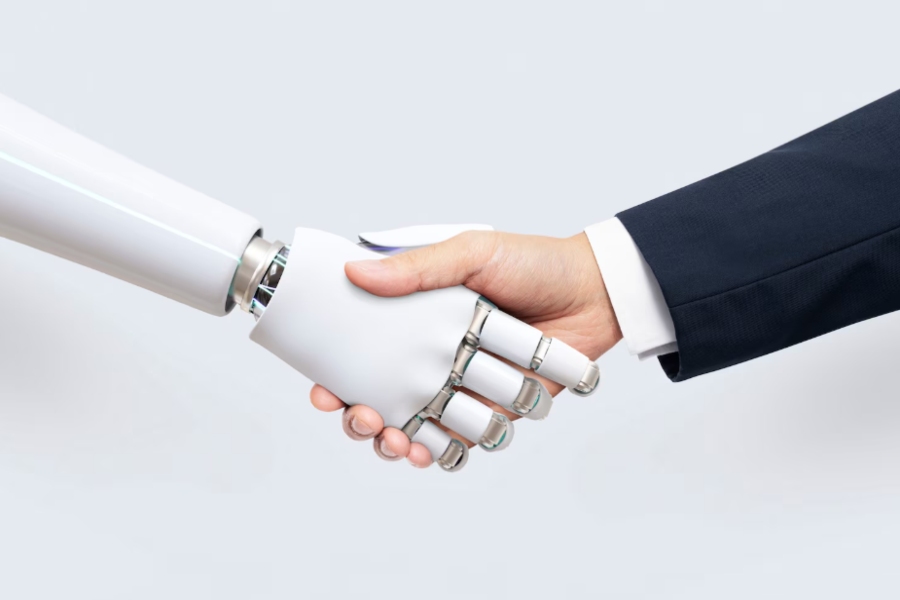
The future of creativity will not be about pitting one against the other – man or machine. On the contrary, the two shall collaborate in creating something unique and wonderful. AI will continue evolving into something complex, yet humans will retain their central role in guiding thoughts, injecting emotion, and interpreting meanings.
Futuristically speaking, writers will benefit from using artificial intelligence to get inspiration more quickly, while designers will leverage AI technology to produce visualizations rapidly. But in the end, humans will take the lead in making decisions regarding the creative process as well as the emotional direction.
This merger of human creativity and AI efficiency will most probably produce some outstanding achievements.
Conclusion
AI has made it possible for creativity to change its dynamics. It can create quick ideas and help with writing and designing. Nevertheless, it is still not possible to rely only on AI because there are some important qualities that are lacking, namely emotional connection, experience, and genuine understanding.
The two differ not in quality but in nature, while human creativity is based on emotions, imagination, and meaning, artificial intelligence uses data and patterns.
The best thing that can be done in such circumstances is to use the combination of their strengths together. This way, the two can create the kind of innovation that would be impossible individually.
FAQs
Is AI able to be creatively expressive just like a human being?
No, because AI lacks emotions and life experiences. Thus, it is unable to come up with any idea other than those derived from statistical patterns.
Will AI replace human authors and creators in the field?
No, since it will be used to enhance their efforts rather than taking away jobs from them.
How is GPTZero utilized?
GPTZero is used to tell whether something has been written by AI or by a person. This tool is widely used in education.
Is AI identification always correct?
Not really, because the detection is not always precise, and there might be some errors when using AI detection software.
How exactly does AI contribute to creative processes?
It provides suggestions, makes the writing better, saves time, and assists in the process of designing content.