
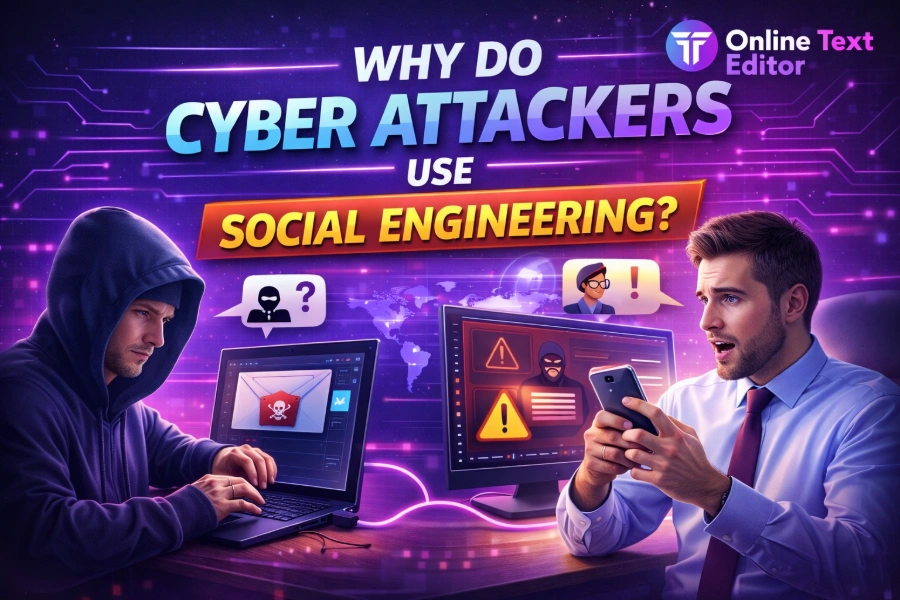
You are more likely to be targeted by manipulation than by complex hacking, and that is exactly why social engineering has become one of the most effective cyber attack methods today. Attackers do not always break systems; instead, they influence people to willingly give away access, data, or money.
This article explains why cyber attackers rely heavily on social engineering, how these attacks work, and what makes them so powerful. By understanding the psychology behind these tactics, you can stay one step ahead and protect yourself from becoming an easy target.
What Is Social Engineering And Why It Matters
Social engineering is a method of cyber attack that focuses on manipulating people rather than exploiting software vulnerabilities, making it one of the most dangerous threats you face today. Attackers rely on trust, urgency, and emotional triggers to influence your decisions without you realizing it.
While improving your digital workflow with tools like the best free online text editor helps maintain clean, secure content handling, attackers still exploit human behavior, not just technology. This makes awareness and decision-making skills your strongest defense against manipulation.
You need to understand that social engineering is not just about phishing emails; it includes phone scams, impersonation, and even in-person deception. Its effectiveness lies in how naturally it blends into everyday communication, making it difficult to detect without proper awareness.
Why Attackers Prefer Social Engineering Over Hacking
Cyber attackers prefer social engineering because it is easier, faster, and often more successful than breaking into secure systems. Instead of bypassing firewalls or encryption, they convince you to open the door for them voluntarily.
This approach requires minimal technical skill but delivers high rewards, which is why it is widely used across industries. When attackers exploit human trust, they bypass even the most advanced cybersecurity defenses without triggering alarms.
You should recognize that human error remains the weakest link in any security system, and attackers know this very well. By focusing on people instead of systems, they reduce effort while increasing their chances of success.
The Psychology Behind Social Engineering Attacks
Social engineering works because it targets predictable human behaviors and emotional responses that influence decision-making. Attackers study how people react to authority, urgency, fear, and curiosity to craft convincing scenarios.
Understanding communication basics, such as what is a text editor shows how simple interactions shape digital behavior, which attackers exploit through messages and prompts. These psychological triggers make you act quickly without verifying information.
You are more likely to respond when a message appears urgent or authoritative, which is exactly what attackers design. By leveraging these emotional cues, they increase the likelihood of compliance without raising suspicion.
Common Emotional Triggers Used By Attackers
Attackers rely on emotional triggers to manipulate your actions and decisions effectively. These triggers are carefully designed to override logical thinking and prompt you to take immediate action.
Some of the most common emotional triggers include:
- Fear: Threats of account suspension or security breaches
- Urgency: Limited-time actions that require immediate response
- Authority: Messages appearing from trusted organizations
- Greed: Offers of rewards, prizes, or financial gain
- Curiosity: Intriguing links or unexpected attachments
Even understanding digital behaviors like how to copy text from browser highlights how routine actions can be manipulated when urgency or confusion is introduced. You must pause and verify before acting on emotionally charged messages.
How Social Engineering Attacks Typically Work
Social engineering attacks follow a structured process that increases their effectiveness and success rate. Attackers begin by gathering information about you, then gradually build trust before exploiting it.
The typical stages include:
- Research: Collecting personal or organizational data
- Engagement: Establishing communication and trust
- Exploitation: Triggering a specific action
- Execution: Gaining access or extracting valuable data
You need to recognize these stages to detect suspicious interactions early. Awareness of this process helps you identify when someone is attempting to manipulate your behavior.
Types Of Social Engineering Attacks You Should Know
There are several types of social engineering attacks, each designed to exploit different aspects of human behavior. Understanding these types helps you identify potential threats more easily.
The most common types include:
- Phishing: Fraudulent emails or messages
- Spear phishing: Targeted attacks using personal information
- Pretexting: Creating fake scenarios to gain trust
- Baiting: Offering something attractive to lure victims
- Quid pro quo: Exchanging services for sensitive data
You should treat all unexpected communication with caution, especially when it involves sensitive information. Recognizing these attack types reduces your risk of falling victim.
Why Social Engineering Is So Effective Today
Social engineering is highly effective because it evolves alongside human behavior and technology. As cybersecurity systems improve, attackers shift their focus to exploiting people instead of systems.
The rise of social media and publicly available data makes it easier for attackers to gather personal information. This allows them to craft highly convincing and personalized attacks that are difficult to detect.
You must understand that modern attacks are no longer generic; they are tailored to your habits and preferences. This personalization significantly increases their success rate.
The Role Of Trust In Social Engineering Attacks
Trust is the foundation of every successful social engineering attack. Attackers build credibility by impersonating trusted individuals, brands, or institutions.
When you trust the source of a message, you are more likely to follow instructions without questioning them. This is why attackers often mimic official emails, logos, and communication styles.
You should always verify the authenticity of any request, even if it appears legitimate. Trust should never replace verification when dealing with sensitive information.
How Attackers Use Information Against You
Attackers use publicly available information to make their attacks more convincing and personalized. This includes data from social media, company websites, and online profiles.
By knowing your interests, job role, or connections, attackers can craft messages that feel authentic and relevant. This increases your likelihood of responding or complying.
You should limit the amount of personal information you share online. Being mindful of your digital footprint reduces the data attackers can use against you.
The Business Impact Of Social Engineering Attacks
Social engineering attacks can have severe consequences for individuals and organizations. These attacks often result in financial losses, data breaches, and reputational damage.
Businesses are particularly vulnerable because employees may unknowingly expose sensitive information. A single successful attack can compromise entire systems and networks.
You should understand that prevention is more cost-effective than recovery. Investing in awareness and training helps reduce the risk of costly incidents.
How To Protect Yourself From Social Engineering
Protecting yourself from social engineering requires awareness, caution, and consistent verification. You need to develop habits that reduce your vulnerability to manipulation.
Key protective measures include:
- Verify all requests before responding
- Avoid clicking unknown links or attachments
- Use multi-factor authentication
- Stay informed about common attack tactics
You should also trust your instincts when something feels suspicious. Taking a moment to pause can prevent costly mistakes.
Key Warning Signs You Should Never Ignore
Recognizing warning signs is essential for avoiding social engineering attacks. These signs often indicate manipulation attempts.
Common warning signs include:
- Unexpected requests for sensitive information
- Messages that create urgency or fear
- Poor grammar or unusual communication tone
- Requests that bypass normal procedures
You should treat these signs as red flags and investigate further before taking action. Awareness is your first line of defense.
Conclusion
Cyber attackers use social engineering because it is one of the simplest and most effective ways to bypass security systems. Instead of targeting technology, they target you, using psychology, trust, and emotion to achieve their goals.
By understanding how these attacks work and why they are so effective, you can make smarter decisions and avoid falling into common traps. Staying alert, verifying information, and controlling your reactions are the most powerful tools you have against social engineering.
FAQs
Why do cyber attackers prefer social engineering over technical hacking
Cyber attackers prefer social engineering because it targets human behavior instead of complex systems, making it easier and faster to exploit. By manipulating trust and emotions, attackers bypass security tools and gain access without needing advanced hacking skills or expensive resources.
How does social engineering work in cyber attacks
Social engineering works by tricking you into taking actions that compromise security, such as sharing passwords or clicking on malicious links. Attackers research their targets, build trust, and then exploit emotional triggers like urgency or fear to influence decisions quickly.
What are the most common types of social engineering attacks
The most common social engineering attacks include phishing, spear phishing, baiting, pretexting, and quid pro quo scams. Each method uses psychological manipulation to convince you to reveal sensitive information or perform actions that give attackers unauthorized access to systems or accounts.
Why is social engineering considered highly effective
Social engineering is highly effective because it exploits natural human instincts such as trust, curiosity, and fear. Unlike technical attacks, it does not rely on system vulnerabilities, making it harder to detect and prevent using traditional cybersecurity tools or automated defenses alone.
What psychological tactics do attackers use in social engineering
Attackers use psychological tactics such as urgency, authority, fear, and curiosity to manipulate your behavior. These triggers push you to act quickly without verifying information, increasing your risk of falling for scams that appear legitimate and trustworthy at first glance.
How do cyber attackers gather information for social engineering
Cyber attackers gather information from social media, public records, and online activities to personalize their attacks. By understanding your interests, job role, and habits, they craft convincing messages that increase trust and make their deception more believable and effective.
What are the warning signs of a social engineering attack
Warning signs include unexpected requests for sensitive information, urgent messages, unfamiliar links, and unusual communication tone. You should also be cautious of messages that pressure you to act quickly or bypass normal procedures, as these often indicate manipulation attempts.
How can individuals protect themselves from social engineering
You can protect yourself by verifying requests, avoiding suspicious links, using strong authentication methods, and staying informed about common attack tactics. Always pause before responding to urgent messages and confirm their legitimacy through trusted channels before taking any action.
Why do businesses face higher risks from social engineering
Businesses face higher risks because employees handle sensitive data and systems daily. A single mistake, such as clicking a malicious link, can lead to data breaches or financial loss, making organizations prime targets for attackers using social engineering techniques.
Can social engineering attacks be completely prevented
Social engineering attacks cannot be completely prevented because they exploit unpredictable human behavior. However, you can significantly reduce risk through awareness, training, and strict security practices that encourage verification and cautious decision-making in every interaction.